A Website can be beautiful, fast, and technically flawless. But if it doesn’t tell visitors what to do next, it quietly loses opportunities every single day.
A call to action — or CTA — is that small but powerful nudge that turns attention into action. It’s not about pressure; it’s about guidance. When done right, a CTA doesn’t interrupt the experience. It completes it.
In this article, we’ll explore what a call to action is, why it matters on every Website, how to write and place them correctly, which mistakes to avoid, and how to improve them with intention. All from a practical, human, and results-driven perspective.
A clear invitation to take the next step.
A call to action is a clear prompt that invites the visitor to move forward. It can be a button, a link, a highlighted phrase, or even an entire section of a Website. Its job is not to convince from scratch, but to support a decision the user is already beginning to make.
On a Website, the CTA plays a critical role: it prevents the visit from ending in nothing. Without a call to action, people read, understand, feel interested… and then leave.
Not because they didn’t care, but because no one showed them what the logical next step was. A Website without a CTA is like a great conversation that ends without a goodbye or a follow-up.
CTAs should speak to needs, not ego.
Many CTAs fail because they are written from the business’s perspective instead of the user’s. Phrases like “Our Services,” “Learn More,” or “Submit” say very little and spark no real motivation.
A strong call to action is written with the person on the other side of the screen in mind: What problem are they facing? What doubt is holding them back? What relief are they looking for? When a CTA connects with that need, it stops being a generic button and becomes a reasonable, attractive invitation.
An effective CTA doesn’t shout, rush, or promise the impossible. It speaks clearly, offers something concrete, and reduces friction. The best CTAs use simple, benefit-driven verbs like “Schedule a Call,” “Get a Proposal,” “See How It Works,” or “Start Now.”
Just as important, the CTA must align with what comes before it. If someone just read about a solution, the CTA should naturally offer the next step toward that solution. When content and action flow together, conversion feels natural instead of forced.
Clarity always beats cleverness.
A good CTA is easy to understand at a glance. The visitor should know exactly what will happen after clicking, without guessing or overthinking. Confusion is the fastest way to lose clicks.
For example, “Download the Free Guide” works better than “Click Here,” because it sets a clear expectation. “Book Your Free Consultation” feels safer than “Contact Us,” because it explains the value of the action. Specific language builds confidence.
The goal is not to impress with words, but to remove hesitation. When people feel safe and informed, they move forward.
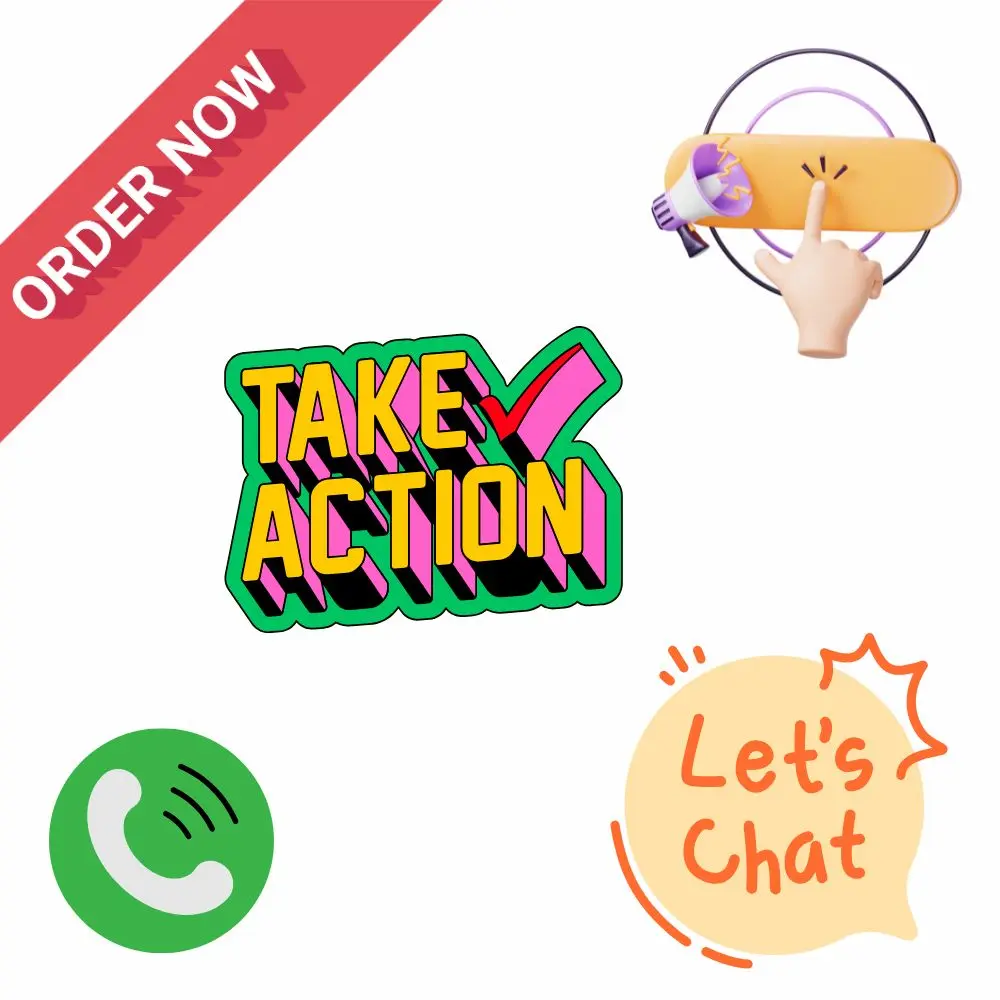
Not every CTA is meant to sell immediately.
Not all CTAs aim for an instant sale, and understanding this makes a huge difference. A single Website can—and should—use different types of calls to action depending on the page and the user’s intent.
Contact CTAs invite conversation, such as “Let’s Talk” or “Get in Touch.” Direct conversion CTAs focus on action, like “Buy Now” or “Hire Our Team.” Lead-generation CTAs, such as “Download the Guide” or “Subscribe to the Newsletter,” are ideal for early decision stages.
Choosing the right type of CTA for each moment dramatically improves results and creates a smoother user experience.
Placement matters as much as wording.
The position of a CTA is just as important as its text. Adding a button only at the bottom of a page and hoping everyone scrolls that far is rarely effective. A well-structured Website places CTAs at key moments in the reading flow.
A primary CTA often works best near the top, especially on a homepage or landing page. Throughout the content, secondary CTAs can guide the reader forward. At the end, a clear CTA closes the experience and suggests the next step. The goal is guidance, not overload.
Visual clarity builds trust.
A CTA is more than text. Its design directly affects whether it’s seen, understood, and clicked. Buttons should stand out visually without breaking the Website’s overall harmony. Color, size, contrast, and spacing all matter.
A common mistake is hiding CTAs out of fear of “selling too much.” In reality, when design is clear and consistent, the CTA feels natural. People don’t see it as pressure, but as help.
Good design reassures visitors that they’re in control of the next step.
Different moments require different invitations.
Not every visitor is ready for the same action. Some are just exploring, others are comparing options, and some are ready to move forward. Using a single CTA for everyone usually leads to poor results.
An optimized Website adapts its calls to action to the user’s level of interest. A first-time visitor might see an educational CTA, while someone who has read multiple pages may see a more direct offer. Matching the CTA to the user’s moment is one of the smartest ways to increase conversions.
More is not always better.
One of the most frequent mistakes is using too many CTAs that compete with each other. When everything calls for action, nothing truly stands out. Another common issue is being vague: if people don’t understand what happens after clicking, they won’t click.
It’s also a mistake not to measure performance. CTAs are never final. They are tested, refined, and improved over time. Changing a single word, color, or placement can make a noticeable difference. Continuous optimization is part of doing things right.
Better user experience supports better rankings.
While CTAs are designed for people, they also impact SEO indirectly. A Website with strong calls to action improves key metrics like time on site, engagement, and bounce rate. These signals tell Google that the content is useful.
CTAs also help structure the page, guide reading behavior, and reinforce search intent. When content, user experience, and calls to action are aligned, SEO improves naturally and sustainably.
It’s about starting relationships, not forcing sales.
A great call to action doesn’t try to close a sale at any cost. It aims to begin a relationship. It invites a logical next step, without pressure, with clarity and trust. When done well, users feel the decision was theirs—not something pushed on them.
In the end, using CTAs effectively on a Website is about empathy, structure, and common sense. Understand who you’re speaking to, what they need, and how you can help them move forward. When you get that right, results follow naturally.